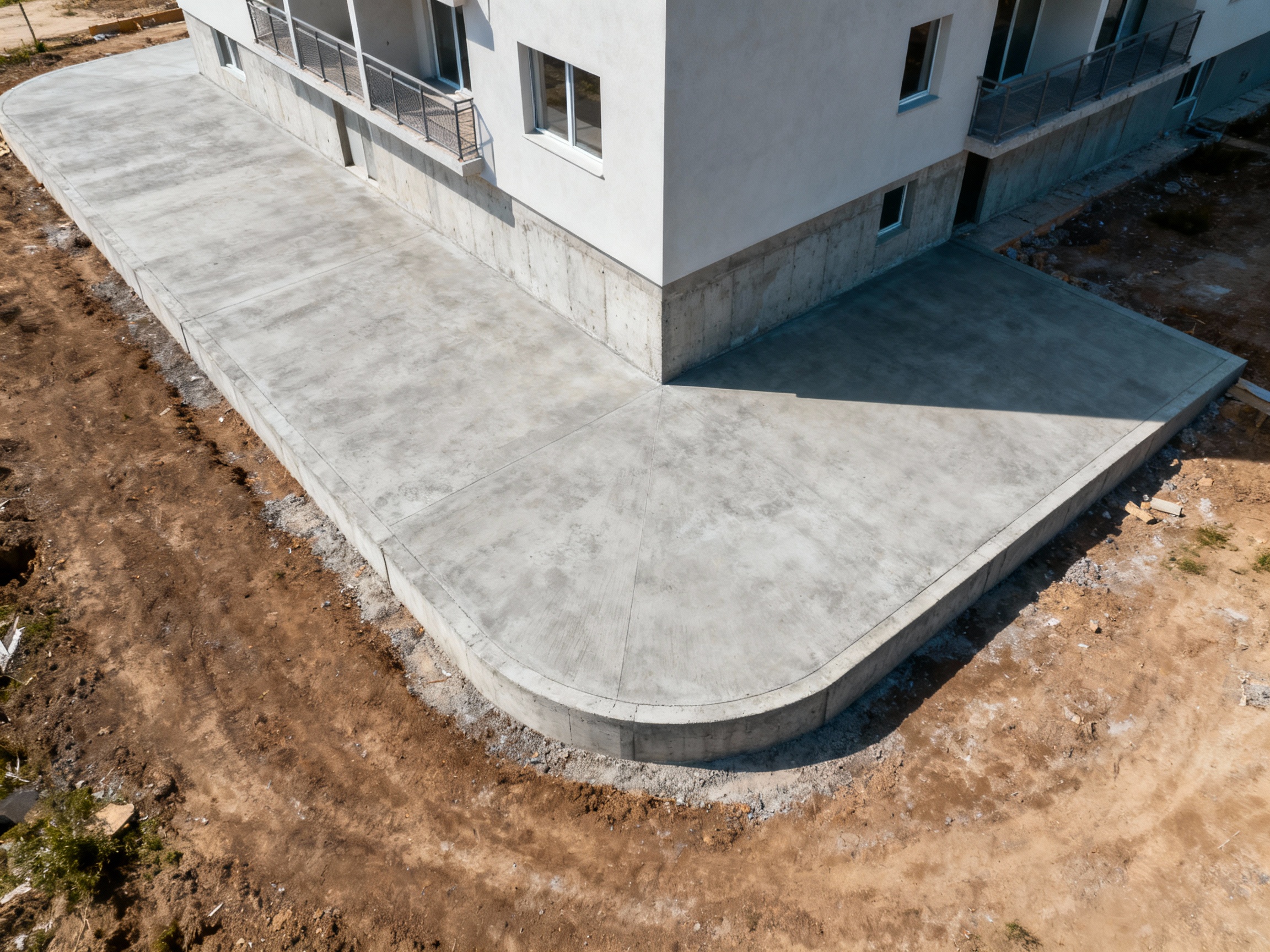
Composite rebar and reinforcing mesh are widely used in industrial and commercial construction to create durable, crack-resistant concrete structures. First of all, these are floors of warehouse complexes and logistics centers, industrial floors of production shops and factories, specialized warehouses for storing chemical products (alkalis and acids), floors of shops and shopping and entertainment centers, as well as areas for parking and movement of trucks, that is, floors for areas under high pressure of large weights.


Based on case studies from major facilities across Russia, composite reinforcement has proven highly effective for industrial and commercial applications, delivering significant cost savings and performance advantages over traditional steel. Industrial and commercial facilities benefit most from composite reinforcement where chemical exposure, heavy loads, rapid construction schedules, or electrostatic concerns make steel problematic or uneconomical.
Warehouse and logistics floors
Over 400 km of Ø16 mm GFRP used at South-Ural Logistics Center to eliminate electrostatic fields from electric forklifts; composite provides non-conductive alternative to steel.
Chemical storage facilities
Ø12–16 mm GFRP replaces steel in acid/alkali warehouses, extending floor reconstruction intervals from 5 to 25+ years due to Group 1 chemical resistance.
Retail and shopping centers
Ø8–10 mm GFRP for floors in stores and malls, with 17–20% lower material costs than steel mesh; 145,000 m supplied to single 14,000 m² building materials store.
Industrial plant floors
Floor reconstruction projects routinely achieve 50%+ savings; one 38,000 m project saved over $12,700 on materials and delivery.
Key Advantages
Cost efficiency
Equal-strength replacement allows smaller diameters (Ø12 steel → Ø8 composite), typically delivering 50–70% savings on materials. Transportation costs drop dramatically—one facility received 20,000 m in two vans vs. requiring a 20-ton truck + crane for steel.
Chemical resistance
Critical for facilities storing aggressive substances; composite belongs to chemical resistance Group 1, immune to acids, alkalis, and chlorides that rapidly corrode steel.
Electrostatic field elimination
Non-conductive properties essential for warehouses with electronic equipment, electric forklifts, or sensitive instrumentation.
Logistics superiority
Coil delivery eliminates waste from fixed-length rods; 9× lighter weight allows standard vehicles vs. specialized transport, and single-person unloading in under 2 hours.
Speed of installation
START SYSTEM pre-fab grids reduce crew size from 15 to 4 workers and installation time by 75%, critical for fast-track commercial projects.