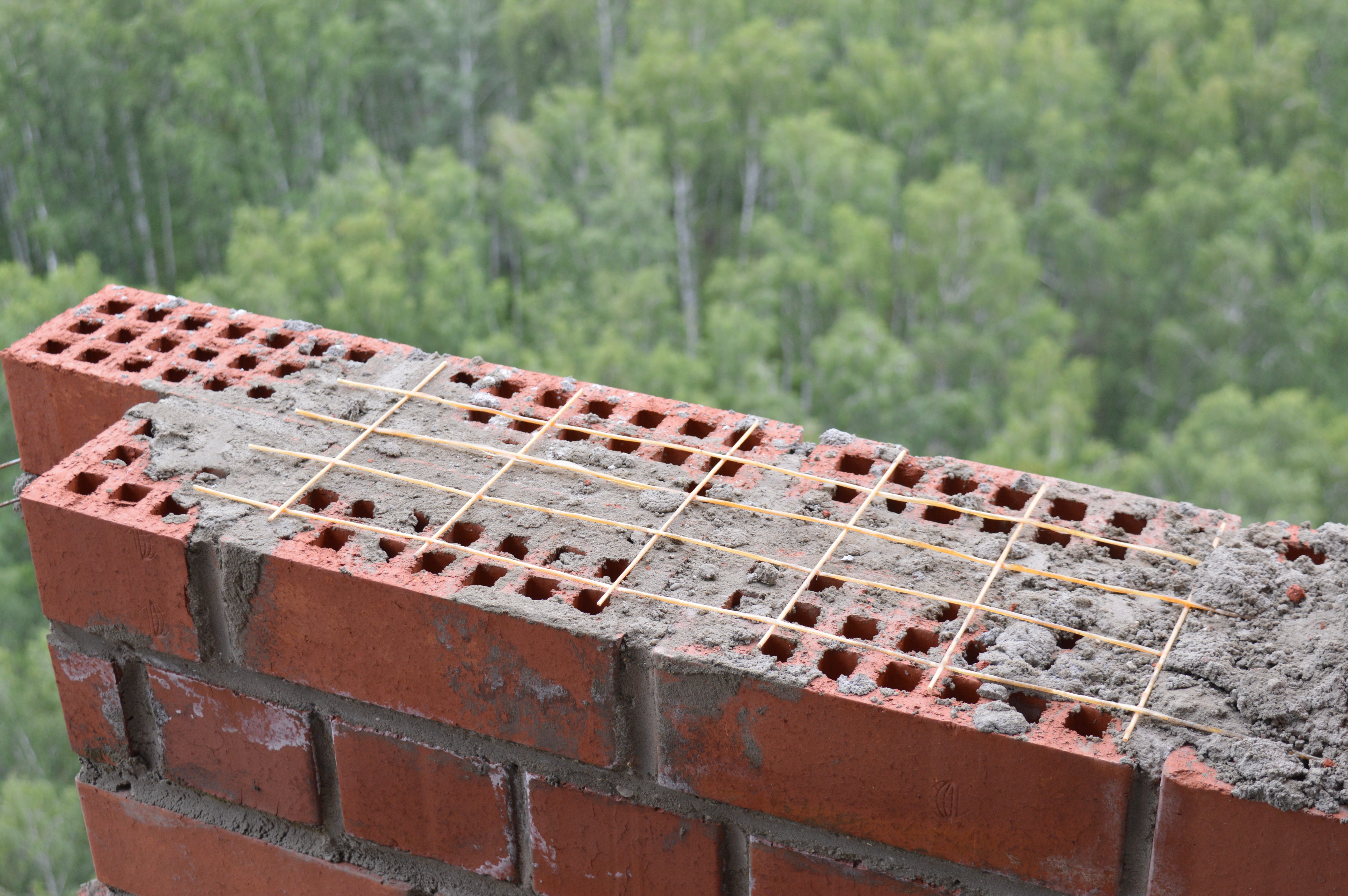
Composite rebar is used in the construction of a wide range of small infrastructure facilities where durability, resistance to external influences, and stable operation of concrete structures are required. The material is suitable for reinforcing slabs, screeds and landscaping elements operated in conditions of variable humidity, temperature fluctuations and moderate operational loads.


Composite rebar is widely used in small-scale concrete infrastructure structures requiring consistent strength properties under low operational loads. The material is also used to reinforce concrete pavements around buildings, where it ensures uniform stress distribution and reduces the risk of cracking. In pedestrian and garden paths, composite rods increase the pavement's resistance to deformation and wear, maintaining the slab's geometry throughout its service life.
When constructing adjacent areas—entrance areas, recreation areas, and driveways to private and commercial properties—composite rebar is used to strengthen concrete slabs and screeds, which operate in moderate climates and under variable loads. In foundations for small architectural forms, such as canopies, gazebos, and modular structures, composite material increases the rigidity and durability of the concrete base without increasing its weight.
Furthermore, composite rebar is used in small retaining and curb elements where localized reinforcement of ribs and concrete supports is required, as well as in landscaping structures: concrete steps, decorative walkways, paths, and other landscaping elements that shape the landscape. This range of applications makes composite rebar the optimal material for most small infrastructure projects.
Composite rebar provides an optimal combination of performance and structural characteristics, making it an effective solution for concrete elements of small infrastructure.
Corrosion resistance and stability in soil environments.
The material is rust-resistant and resistant to moisture, salts, chemicals, and freeze-thaw cycles. This is critical for blind areas, walkways, and platforms that are constantly in contact with soil and atmospheric moisture. Eliminating corrosion increases the service life of the structure without the need for subsequent repairs.
Low thermal conductivity.
Composite bars do not form thermal bridges, which is especially important for blind areas and slabs located in the foundation junction. This reduces the risk of soil freezing and subsequent structural deformation.
Lightweight and easy to install.
The material is 4-8 times lighter than steel rebar, reducing transportation costs and simplifying delivery to the site. Installation does not require the use of lifting equipment, and the bars are easily cut and formed directly on-site. This increases the speed of work and reduces construction costs.
High chemical resistance.
Composite rebar maintains its strength when exposed to aggressive environments found in concrete mixes, groundwater, and atmospheric agents. This is especially important for landscaping elements operating in conditions of variable humidity.
Non-conductive and diamagnetic.
The material does not interact with electromagnetic fields and does not interfere with utility networks, making it suitable for facilities located near cable lines, sensors, and low-voltage systems.
Maintains strength characteristics despite temperature fluctuations.
The composite does not change its properties during seasonal cycles, increasing the resistance of road surfaces and thin slabs to cracking.
Why is composite rebar ideal for small infrastructure?
- The working loads in blind areas, paths, and playgrounds are fully consistent with the strength characteristics of composite.
- The structures do not require excessive strength and weight of metal rods.
- Durability is increased due to the absence of corrosion processes in the area of constant contact with the ground.
- There is no need for maintenance or corrosion protection.
- The material's light weight speeds up work and reduces installation costs.
- Composite rods ensure stable slab geometry and reduce the risk of cracking.
- The material is safe for use near utility and communication networks.
56.63%
70.98%