


Composite Technology Based on FRP (Fiber-Reinforced Polymer) represents a modern approach to creating strong, lightweight, and durable materials. The core of the material is a polymer matrix reinforced with fibers such as glass, carbon, basalt, or aramid. This combination provides high strength-to-weight performance along with resistance to moisture, chemicals, and environmental factors.
The manufacturing process involves molding in presses or continuous profiling equipment, using special catalysts to accelerate polymerization. This ensures precise geometry, stable material properties, and shorter production cycles. Thanks to its versatility, FRP products are widely used in construction, energy, transportation, and infrastructure, replacing traditional materials such as metal, concrete, and wood—especially in applications where low weight, corrosion resistance, and long service life are critical.
About row materials
Composite building materials are made of roving and a compound. The compound is a mixture of epoxy resin, MTHPA harderner and Nano Composite catalyst. Our machine lines can produce composite materials from glass, basalt and carbon fiber.
Raw material components
ROVING
Epoxy resin mass 32.83 g / meter E-glass direct roving Tex 1200 2400 4800 9600 |
EPOXY
Epoxy resin mass 3.67 g / meter Reaction product of bisphenol A and epichlorohydrin KER 828 or CYD 128 |
MHTPA
MTHPA mass 3.3 g / meter Metliyltetrahydrophthalic anhydride is unsaturated cyclic anhydride with a Methyl group |
NANO
Nano Composite mass 0.19 g / meter Nano Composite KG is a unique catalyst developed by Composite Group Chelyabinsk. It doubles the life of epoxy resin and MTHPA mixture, reduces and stabilizes its viscosity, removes air bubbles, accelerates the polymerization process. |
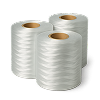
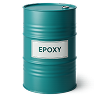
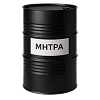
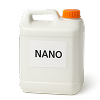
1 container of chemicals (epoxy resin, MTHPA, NANO) weighing 19 tons and 4 containers of roving weighing 86 tons will be enough for 51 days of production of finished products
Roving:
- is coated with a silane-based sizing compatiblewith unsaturated polyester, vinyl ester, and epoxy resins. It is designed for filament winding, pultrusion, and weaving applications.
- should be stored in a cool and dry place. The temperature should not exceed 35 ° C, and the relative humidity should be maintained below 75%.
- must remain packed immediately before use. It is necessary to avoid damage to the packaging during storage. If moisture gets into it, it becomes unsuitable for further use.

Epoxy resin storage:
- save in cool, dry and well ventilated place.
- save applicable laws and regulations.
- avoid direct sunlight.
- no open fire.
- prevent static electricity and keep away from combustible materials or heat sources.
- collected them in sealed containers.
- store away from water and sewer.
MTHPA:
- significantly improves the technical characteristics of the finished product that is obtained as a result of solidification of the epoxy binder.
- characterized by high moisture resistance, chemical resistance, and electrical insulation properties of cured materials
- is capable of absorbing waterfrom the air
- dissolves perfectly in water and is converted into the appropriate acid. It is soluble in organic solvents (toluene, acetone, benzene), easily mixes with epoxy compounds.
Catalyst Advantages
Reduced energy consumption
Many catalysts allow curing at lower temperatures (or even at room temperature), saving resources and making production more environmentally friendly.
Controlled gel time
With a properly selected catalyst, the start and end of the reaction can be precisely controlled — essential when working with molds, complex geometries, or manual lay-up.
Compatibility with various accelerators
Catalysts can be adjusted to the desired reaction rate by adding accelerators (e.g., cobalt salts). This makes the technology flexible and adaptable to different product types and climatic conditions.
Improved stability of finished product properties
Thanks to a controlled polymerization reaction, the product becomes more uniform in structure and strength, with no unreacted areas.
Acceleration of polymerization
The catalyst initiates and speeds up the resin curing reaction, reducing molding time. This is particularly important in mass production — it increases productivity and shortens cycle times.
For more details, please refer to our sales office
Form send success
Receive a detailed estimate and tailored recommendations — we’ll guide you through everything important for your specific needs.
required fields
See also:
Manufacturing lines
- CG-4 Manufacturing line for the production of fiber-reinforced polymer rebar
- CG-1 Manufacturing line for the production of fiber-reinforced polymer rebar
- СG-8 Bent Element Production Line
- Manufacturing line for the fiber-reinforced polymer rebar grid
- CG-11 Manufacturing line for the production of fiber-reinforced polymer anchors