


Manufacturing line for the fiber-reinforced polymer rebar grid
Key Achievements

Certification
- ISO 9001:2015 TÜV AUSTRIA


Global Partnerships
- Joint venture in Brazil
- 3 agreements on JV creation in China

Production
- 3 generations of equipment
- 6 types of machine lines
- Delivered to 9 countries

Patent Portfolio
- 20 PCT patents for inventions
- 6 patents in India
- 4 patents in China
- National-level registration in progress in 14 countries

Innovation Award
Winner of the Bortnik Fund competition (2022) for innovative developments in composite technologies. Received a grant for R&D of an automated production line with minimal human participation.

Exporter of the Year
6× recipient of the award. In 2022, the CEO received the All-Russian Exporter of the Year Award at the Kremlin from Andrey Belousov, First Deputy Chairman of the Russian Government.
Requirements
Electricity consumption:
30-40 kW/h – average
50-80 kW/h – peak
380 V, 50 ±1 Hz – power supply
Water consumption:
1 m³ per production cycle (closed-loop system recommended)
Minimal staffing:
Only 2 operators per shift required — full cycle automation reduces labor costs
Budget to Start:
Only $240,000 to run the plant
Plant space:
280 m² required for installation and operation
Dimensions:
Length: 35 m Width: 6-8 m Height: 4 m
Results
Quantity of streams produced simultaneously:
1–10 mm or 2–12 mm – in 1 stream
Daily Output:
Equivalent to 8 tons of steel rebar – high-volume composite production per 24 hours
Production speed:
4,000 m2 of 3 mm rod for 200x200 mm cell per day (at a recommended speed)
Yearly Capacity:
Up to 17,000 tons (steel equivalent) – consistent high-volume performance
Key notes
Payback:
Less than 0.83% of the production cost over a 10-year cycle
Warranty:
Standard warranty — 12 months, optional extension available
Material Cost:
1$/kg
Cost Advantage:
3 times cheaper than steel
Eco-friendly:
Permitted within 500 m of residential buildings – meets local environmental standards
Recycled Glass:
Can be used as raw material – supports sustainable production
Looking into the CG-4 manufacturing line? Let’s talk numbers, technology, and fit.
We’re here to help you assess whether the CG-4 line is the right choice for your production.
Get a tailored cost estimate, see configuration options, and receive expert answers based on your project’s needs.
Get expert adviceContact Information
Phone:
Fax:
Email:
Recomended speed
Diameters
Production capacity
Production capacity
sq. m/min
Rebar mass
kg / sq.m.
Avaible Production lines
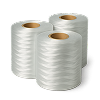
Roving
E-glass direct roving
Tex
82.00%
Roving mass
%, kg / sq.m.
kg
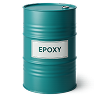
Epoxy
Reaction product of bisphenol. A and epichlorohydrin
10.02%
Epoxy resin mass
%, kg / sq.m.
kg
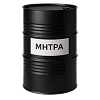
MHTPA
Metliyltetrahydrophthalic anhydride is unsaturated cyclic anhydride with a Methyl group
7.46%
MHTPA mass
%, kg / sq.m.
kg
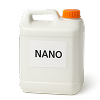
NANO
Nano Composite KG is a unique catalyst developed by Composite Group Chelyabinsk. It doubles the life of epoxy resin and MTHPA mixture, reduces and stabilizes its viscosity, removes air bubbles, accelerates the polymerization process.
00.52%
Nano Composite mass
%, kg / sq.m.
kg
Roving:
- is coated with a silane-based sizing compatiblewith unsaturated polyester, vinyl ester, and epoxy resins. It is designed for filament winding, pultrusion, and weaving applications.
- should be stored in a cool and dry place. The temperature should not exceed 35 ° C, and the relative humidity should be maintained below 75%.
- must remain packed immediately before use. It is necessary to avoid damage to the packaging during storage. If moisture gets into it, it becomes unsuitable for further use.

Epoxy resin storage:
- save in cool, dry and well ventilated place.
- save applicable laws and regulations.
- avoid direct sunlight.
- no open fire.
- prevent static electricity and keep away from combustible materials or heat sources.
- collected them in sealed containers.
- store away from water and sewer.
MTHPA:
- significantly improves the technical characteristics of the finished product that is obtained as a result of solidification of the epoxy binder.
- characterized by high moisture resistance, chemical resistance, and electrical insulation properties of cured materials
- is capable of absorbing waterfrom the air
- dissolves perfectly in water and is converted into the appropriate acid. It is soluble in organic solvents (toluene, acetone, benzene), easily mixes with epoxy compounds.
Basic delivery set


Roving rack
included: 4 units
Holds and feeds fiber rovings into the production line in a stable and controlled manner.

Kneading station
included: 0 unit
Mixes and prepares a polymer from all the components which is used to coat the reinforcement

Impregination and pressing units
included: 3 units
Impregnates fiberglass with a polymer mixture.
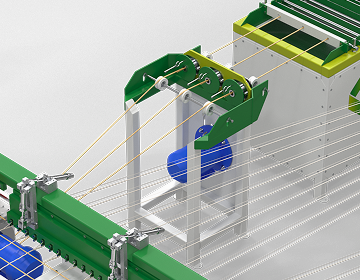
Periodic profile forming device
included: 1 unit
Forms a ribbed surface of the reinforcement.

FRP mesh forming and weaving unit
included: 1 unit
Places longitudinal and transverse impregnated bundles into a cell and mechanically interweaves and presses the intersections with rapid fixation with epoxy.
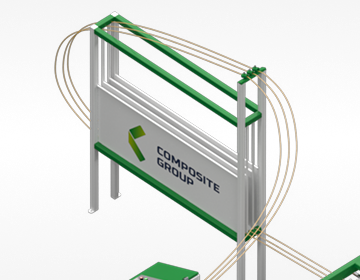
Separator
included: 1 unit
Separates the streams to lay them across the knitting in a mesh

Control panel
included: 1 unit
Allows to customize the reinforcement diameter, and production speed.

Cross bar pulling unit
included: 1 unit
Moves the hardened transverse rebar further along the line

Two-tunnel polymerization chamber
included: 1 unit
Has automatic temperature control and a protective screen.
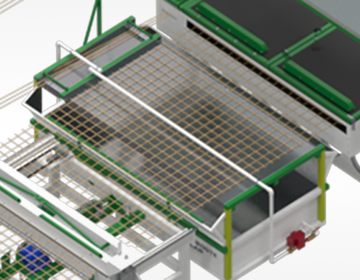
Water cooling unit
included: 1 unit
Сools the mesh web with a water jet until the polymers harden
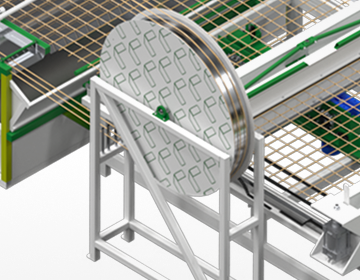
Return wheel
included: 1 unit
Returns the hardened reinforcing threads to the separator
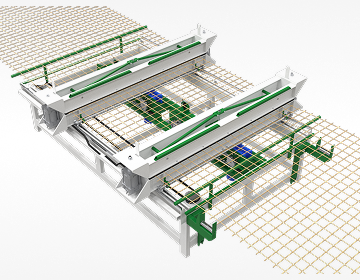
Pulling unit
included: 1 unit
Moves the finished canvas further along the line.
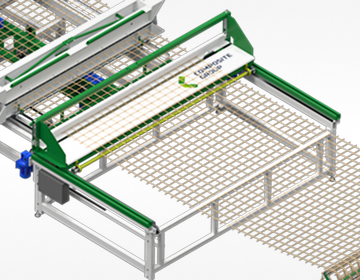
Cutting unit
included: 1 unit
Сuts the mesh canvas to the required area.
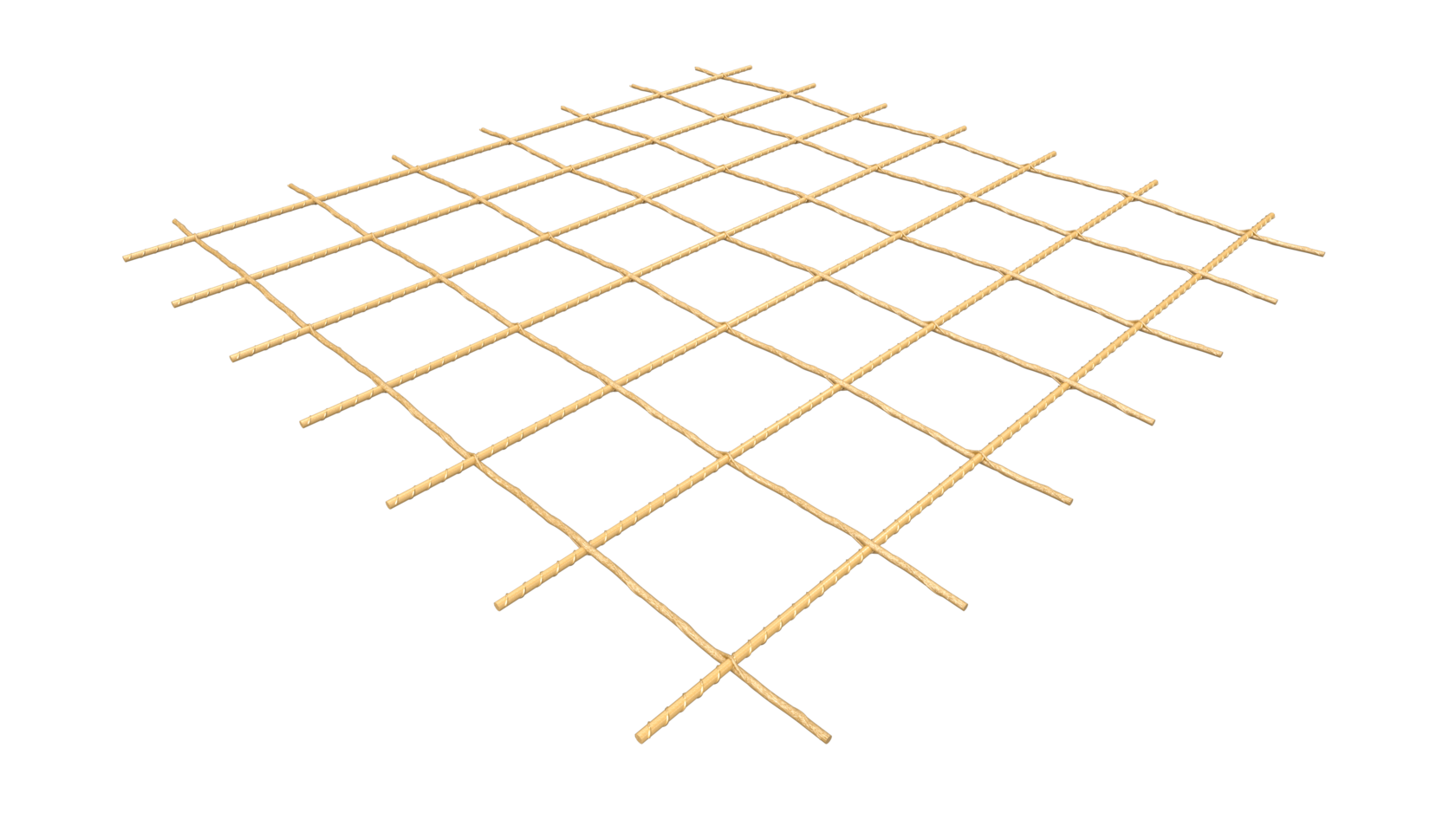
Manufactoring method
Composite fiber-reinforced rebar is manufactured by the needletrusion method. With this method of production, the rod, consisting of fibrous threads impregnated with a polymer binder, is first separated into separate parts, passed through separate channels, and then reconnected with a simultaneous spiral braid and tension of a weaving harness embedded in a bundle of fibers.
This is the main difference between needletrusion and pulltrusion, in which reinforcing fibers (glass, carbon, basalt) impregnated with a polymer resin (polyester, vinyl, epoxy resins) is stretched through the die heated to the polymerization temperature. Rebar made by needletrusion has high anchoring properties in concrete media, reliable fastening of the spiral rib (a periodic profile) on the main rod, as well as high physical and mechanical properties.
-
Production speed:
Up to 800–1,200 m²
per 8-hour shift (depending on mesh configuration and bar diameter)
-
End product diameter range:
Ø2 – 12 mm
Bottom heater
need: 1 pc
2kW, with thermostat
Dissolver
need: 2 pcs
supplied with 120 mm milling cutter
Drill
need: 1 pc
750W
Nozzle head-mixer for drill
need: 1 pc
Cordless drill screwdriver
need: 1 pc
Bits for cordless drill-screwdriver
need: 2 pcs
Angle grinder
need: 1 pc
125 mm diameter
TURBO diamond cutting disk
need: 20 pcs
Cutting disk for metal
need: 10 pcs
Vernier caliper
need: 1 pc
range 0–150 mm
High-precision scales
need: 1 pc
accuracy of 0.5 g
Coil weighing scales
need: 1 pc
for coils up to 20 kg
Barrel lever pump
need: 6 pcs
for oils, 300 ml/stroke, GROZ GR44100 – LBP/04
Hand cart for barrels
need: 2 pcs
for 200L barrels
Working gloves
need: 30 pcs
reinforced nitrile coating on the cuffs
Power strip on coil
need: 1 pc
IP-44, thermo connecting wire, PVC insulation 3x2.5, 4 sockets, 25 m
Scales with high stand and label printing
need: 1 pc
accuracy of 5 g, weighing limit up to 30 kg
Current pliers
need: 1 pc
with CEM DT-3341 temperature sensor
Vacuum cleaner
need: 1 pc
for collecting chips and dust
Looking into the CG-4 manufacturing line? Let’s talk numbers, technology, and fit.
We’re here to help you assess whether the CG-4 line is the right choice for your production.
Get a tailored cost estimate, see configuration options, and receive expert answers based on your project’s needs.
Get expert adviceContact Information
Phone:
Fax:
Email:
CG Grid line pricing
Base price
Manufacturing line for the fiber-reinforced polymer rebar grid – RUB
Customized line – on request
Warranty – 12 months
Additional cost
Lead time
3 months from the date of prepayment
Payment terms
60% – advance payment prepayment, 40% – before shipment
RUB exchange rate
Note: Exchange rates are provided for reference only. Final pricing will be calculated based on the actual exchange rate at the time of agreement.
For more details, please refer to our sales office
Form send success
Receive a detailed estimate and tailored recommendations — we’ll guide you through everything important for your specific needs.
required fields